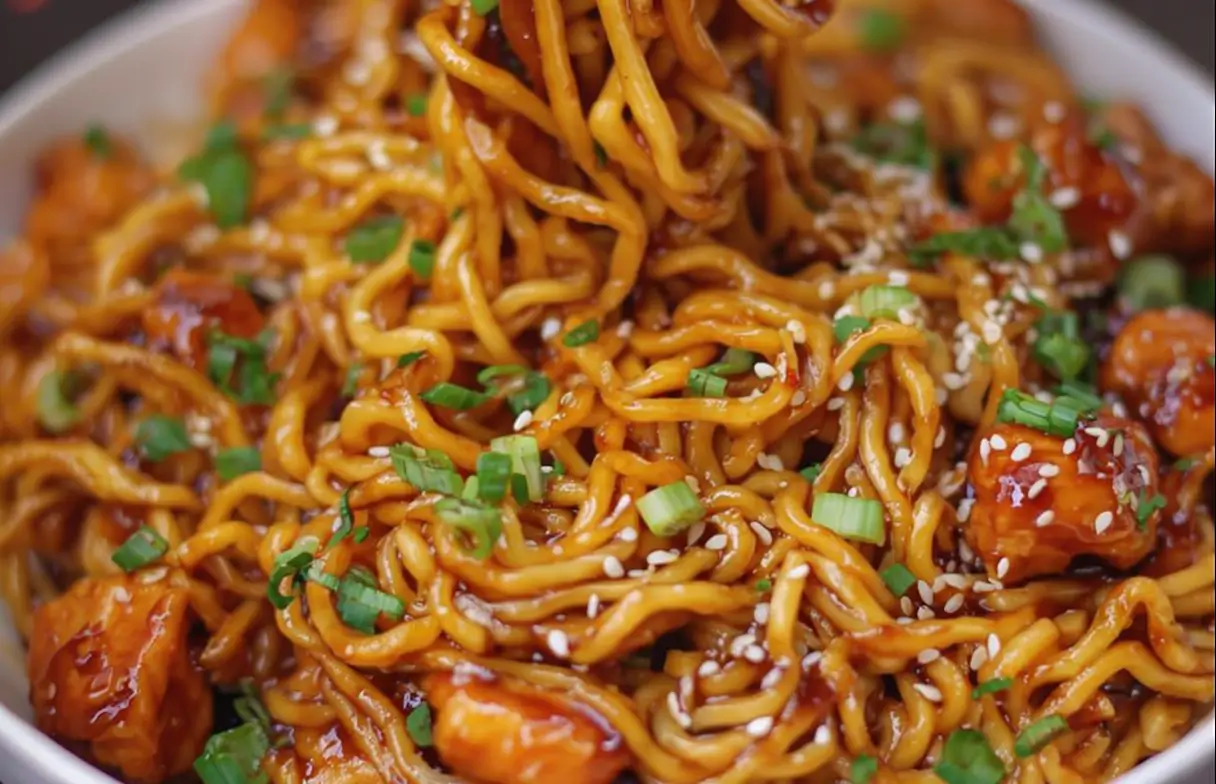
Sticky garlic chicken noodles are what you make when you’re craving takeout but don’t want to wait 45 minutes or spend $15 per person. Tender chicken thighs, chewy noodles, and a sweet-savory garlic sauce that clings to every bite come together in just 20 minutes using one skillet. It’s the kind of dinner that tastes way more impressive than the effort it takes to make it.
This honey garlic chicken stir fry works because of the technique: you sear the chicken until it gets those crispy, caramelized edges, then toss it with perfectly cooked noodles in a glossy sauce made from soy sauce, honey, fresh garlic, and ginger. The secret is letting the sauce bubble and reduce for a few minutes before adding the noodles—that’s what creates that signature sticky coating that makes this dish addictive.
Perfect for busy weeknights when you need dinner fast, anyone who wants better than takeout noodles without leaving home, and families who want a crowd-pleasing meal that even picky eaters will devour. This is your new go-to easy weeknight chicken dinner.
Why You’ll Love These Sticky Garlic Chicken Noodles
- Ready in 20 minutes – Faster than ordering delivery and way more delicious
- Better than takeout – You control the ingredients, the sauce isn’t overly sweet, and it costs a fraction of restaurant prices
- One-pan wonder – Everything cooks in a single skillet or wok, which means minimal cleanup
- Budget-friendly comfort – Chicken thighs and ramen noodles are incredibly affordable, and the sauce uses pantry staples
- Endlessly customizable – Add vegetables, adjust the spice level, or swap proteins based on what you have
The “Sticky” Secret (It’s All About the Sauce)
Here’s what makes this dish sticky instead of saucy: you let the sauce reduce and thicken before adding the noodles. Most stir-fry recipes tell you to dump everything together at once, which gives you watery noodles swimming in liquid. Not here.
After you cook the chicken, you add the soy sauce, honey, garlic, and ginger to the hot pan and let it bubble for 2-3 minutes. The honey caramelizes slightly, the liquid evaporates, and the sauce transforms into a glossy, thick glaze that coats the noodles perfectly. This is the difference between okay noodles and restaurant-quality garlic butter ramen that makes you lick the plate.
The other secret? Fresh garlic. Six cloves might sound like a lot, but since garlic is the star of this dish, you need that sharp, pungent flavor. Jarred garlic is too mild and won’t give you the same punch.
Key Ingredients
This recipe uses simple, affordable ingredients that you can find at any grocery store. Nothing fancy, nothing hard to source.
For the Chicken
Boneless, skinless chicken thighs (1 lb, cut into small bite-sized cubes) – Thighs are the key to juicy chicken. They have more fat than breasts, which means they stay tender and flavorful even when cooked over high heat. Cut them into ¾-inch cubes so they cook fast and get crispy edges. Swap: Chicken breasts work if that’s what you have, but cook them quickly to avoid dryness. Shrimp or thinly sliced pork also work beautifully.
Salt and black pepper – Season the chicken generously before cooking. This builds flavor from the start.
For the Noodles
Ramen noodles or lo mein noodles (10 oz) – Use fresh ramen noodles if you can find them (in the refrigerated section), or dried ramen works too—just discard the seasoning packets. Lo mein noodles, udon, or even spaghetti work in a pinch. Swap: Rice noodles or soba noodles for a different texture.
For the Sticky Garlic Sauce
Soy sauce (⅓ cup) – The salty, umami base of the sauce. Use low-sodium if you’re watching salt intake—you can always add more, but you can’t take it away. Swap: Tamari for gluten-free, or coconut aminos for a slightly sweeter, less salty option.
Honey (¼ cup) – This is what makes the sauce sticky. The honey caramelizes as it reduces, creating that glossy, clingy texture. Swap: Maple syrup or brown sugar work, but honey gives the best sticky texture.
Fresh garlic (6 cloves, minced) – The star of the show. Six cloves sounds like a lot, but it’s perfect. Fresh garlic has a sharp, pungent flavor that balances the sweetness of the honey. Don’t use jarred garlic—it’s too mild. Swap: Garlic paste in a tube is acceptable if you’re in a bind, but fresh is best.
Fresh ginger (1 teaspoon, grated) – Adds a warm, slightly spicy kick that complements the garlic and honey. Use a microplane or the small holes on a box grater. Swap: ½ teaspoon ground ginger works, but fresh is brighter.
Sesame oil (1 teaspoon) – Just a little bit adds a nutty, toasted flavor that makes the dish taste authentic. Swap: Skip it if you don’t have it, but it really does add depth.
Sriracha (1 teaspoon, optional) – Adds a touch of heat and tang. Adjust to taste or skip it entirely for a milder version. Swap: Red pepper flakes, chili garlic sauce, or any hot sauce you like.
For Garnish
Green onions (2-3, sliced) – Fresh, sharp, and bright. They add color and a mild onion flavor.
Sesame seeds (1 tablespoon) – Toasted sesame seeds add a nutty crunch and make the dish look restaurant-quality.
Vegetable oil (2 tablespoons) – For cooking the chicken. Use a neutral oil with a high smoke point like canola, vegetable, or avocado oil.
Step-by-Step Instructions
This recipe moves fast, so have all your ingredients prepped and ready before you start cooking.
1. Cook the noodles. Bring a large pot of water to a boil. Add the ramen or lo mein noodles and cook according to the package directions, but pull them out 1 minute early. They should be almost tender but still slightly firm (al dente). Drain the noodles and rinse them briefly under cold water to stop the cooking. Toss them with a tiny drizzle of sesame oil or vegetable oil to prevent sticking. Set aside.
2. Prep the chicken. Pat the chicken cubes dry with paper towels—this helps them sear instead of steam. Season generously with salt and black pepper on all sides.
3. Sear the chicken. Heat a large skillet or wok over medium-high heat. Add 2 tablespoons of vegetable oil. Once the oil is shimmering and hot, add the chicken cubes in a single layer. Don’t overcrowd the pan—work in batches if needed. Here’s the key: Let the chicken sit undisturbed for 2-3 minutes so the bottom gets crispy and caramelized. Flip the pieces and cook for another 2-3 minutes until the chicken is cooked through and has those golden, crispy edges. Transfer the cooked chicken to a plate and set aside.
4. Make the sticky garlic sauce. Reduce the heat to medium. In the same skillet (don’t wipe it out—all that flavor stays), add the minced garlic and grated ginger. Stir constantly for 30 seconds until fragrant—don’t let it burn. Pour in the soy sauce, honey, sesame oil, and sriracha (if using). Stir to combine.
5. Let the sauce reduce. This is the most important step. Let the sauce bubble and simmer for 2-3 minutes without stirring too much. You should see it thicken slightly and become glossy. The honey will start to caramelize and the sauce will reduce by about one-third. This is what makes it sticky instead of watery.
6. Add the chicken back. Return the cooked chicken (and any juices from the plate) to the skillet. Toss it in the sauce to coat every piece. Let it cook for 1 minute so the chicken soaks up the flavor.
7. Add the noodles. Add the cooked noodles to the skillet. Using tongs or two forks, toss everything together until the noodles are evenly coated in the sticky garlic sauce. The noodles will finish cooking in the residual heat and absorb some of the sauce. If the sauce looks too thick, add a splash of water (1-2 tablespoons) to loosen it.
8. Taste and adjust. Taste the noodles and adjust the seasoning. If it needs more salt, add a drizzle of soy sauce. If it’s too salty, add a teaspoon of honey. If you want more heat, add more sriracha.
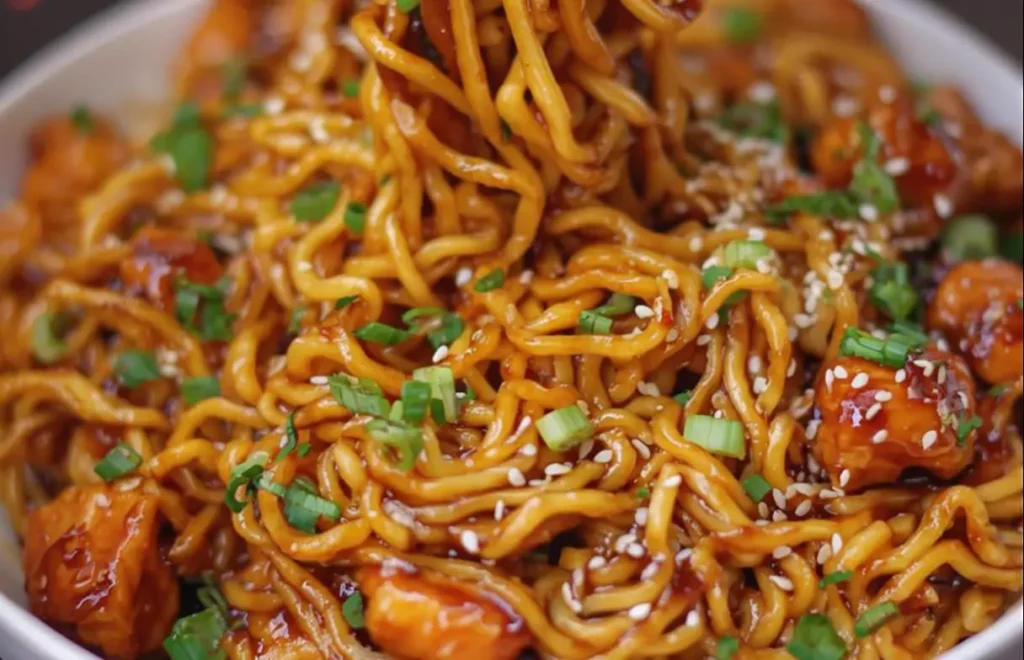
9. Serve immediately. Transfer the sticky garlic chicken noodles to bowls or plates. Garnish with sliced green onions and sesame seeds. Serve hot.
Timing, Yield & Skill Level
- Prep time: 10 minutes
- Cook time: 10 minutes
- Total time: 20 minutes
- Yield: 4 servings
- Skill level: Beginner-friendly
Tips for Best Results
- Undercook the noodles by 1 minute – This is crucial. The noodles finish cooking in the sauce, and if they’re already fully cooked, they’ll turn mushy. Pull them out when they’re almost tender but still have a slight bite.
- Use fresh garlic, not jarred – Since garlic is the star flavor, fresh cloves give you that sharp, pungent kick that balances the sweet honey. Jarred garlic is too mild and won’t deliver the same punch.
- Don’t skip the high-heat sear – Sear the chicken over medium-high heat without moving it for the first 2 minutes. This creates those crispy, caramelized edges that make the dish taste like takeout.
- Let the sauce reduce properly – Give the sauce a full 2-3 minutes to bubble and thicken. This is what creates the sticky texture. If you rush this step, the noodles will be swimming in liquid instead of coated in glaze.
- Pat the chicken dry before cooking – Moisture prevents searing. Dry chicken = crispy edges. Wet chicken = steamed and rubbery.
- Use chicken thighs, not breasts – Thighs stay juicy at high heat and won’t dry out while the sauce reduces. Breasts can get tough and dry if overcooked.
- Add vegetables if you want – Toss in broccoli florets, snap peas, bell peppers, or shredded carrots with the noodles. They’ll cook in the residual heat and make the dish more filling.
- Make it less sweet – If you find the sauce too sweet, reduce the honey to 2-3 tablespoons and add a squeeze of lime juice for balance.
Variations & Substitutions
Shrimp version: Replace the chicken with 1 lb of peeled, deveined shrimp. Sear them for 2 minutes per side until pink and cooked through, then proceed with the recipe. Shrimp cook even faster than chicken.
Vegetarian sticky garlic noodles: Skip the chicken and use 1 block of extra-firm tofu (pressed and cubed) or 2 cups of sliced mushrooms. Sear them the same way until crispy, then proceed with the sauce.
Spicy version: Double the sriracha to 2 teaspoons, or add ½ teaspoon of red pepper flakes to the sauce. You can also garnish with sliced fresh chili peppers.
Extra veggie-loaded: Add 2 cups of broccoli florets, snap peas, or thinly sliced bell peppers. Toss them in with the noodles—they’ll cook in the residual heat and sauce.
Low-carb option: Replace the noodles with spiralized zucchini noodles (zoodles) or shirataki noodles. The sauce will still be sticky and delicious, just lower in carbs.
Peanut butter twist: Add 2 tablespoons of creamy peanut butter to the sauce for a Thai-inspired peanut noodle flavor. It pairs beautifully with the garlic and honey.
Serving Suggestions
These 20-minute chicken noodles are a complete meal on their own, but a few simple sides make it feel like a full Asian-inspired spread.
- Steamed or sautéed broccoli for a fresh, green vegetable side
- Egg drop soup or miso soup for a light starter
- Cucumber salad with rice vinegar and sesame oil for a cool, crunchy contrast
- Edamame sprinkled with sea salt for a protein-rich side
- Spring rolls or dumplings if you want to make it a feast
- Fried rice on the side for extra carbs
These noodles are perfect for busy weeknights when you need dinner in 20 minutes, meal prep lunches (they reheat beautifully), date nights at home when you want something impressive but easy, and anytime you’re craving takeout but want to save money.
Storage, Freezing & Reheating
Refrigerator storage: Let the noodles cool to room temperature, then transfer to an airtight container. Store in the fridge for up to 4 days. The noodles will absorb more sauce as they sit, so they might look drier the next day.
Freezing: This dish doesn’t freeze particularly well because the noodles get mushy when thawed. If you must freeze it, do so for up to 2 months. Thaw overnight in the fridge before reheating.
Reheating: For best results, reheat on the stovetop over medium heat with a splash of water or chicken broth to loosen the sauce. Stir frequently until warmed through, about 3-5 minutes. You can also microwave individual portions for 1-2 minutes on 70% power, adding a tablespoon of water before microwaving to prevent drying out. The noodles won’t be quite as chewy as when freshly made, but they’ll still taste great.
Troubleshooting & FAQs
Can I use chicken breasts instead of thighs?
Yes, but cut them into small pieces and cook them quickly to avoid dryness. Chicken thighs are more forgiving because they have more fat, which keeps them juicy even at high heat. If using breasts, watch them closely and pull them from the heat as soon as they’re cooked through (165°F internal temperature).
Why are my noodles mushy?
You either overcooked the noodles in the boiling water, or you didn’t undercook them by 1 minute before adding them to the sauce. The noodles continue cooking in the hot sauce, so they need to start slightly undercooked. Next time, pull them out 1 minute early.
Can I make this ahead of time?
You can prep the ingredients ahead (cut the chicken, mince the garlic, mix the sauce), but this dish is best cooked fresh. The noodles absorb the sauce and lose their texture if they sit for too long. If you must make it ahead, cook it fully, refrigerate, and reheat gently with added liquid.
Why isn’t my sauce sticky?
You didn’t let it reduce long enough. After adding the soy sauce, honey, and garlic, let it bubble and simmer for a full 2-3 minutes before adding the noodles. The sauce should visibly thicken and become glossy. If you rush this step, it stays thin and watery.
Can I double this recipe?
Yes, but you’ll need a very large skillet or wok (14+ inches), or cook in two batches. If you overcrowd the pan, the chicken will steam instead of sear, and you won’t get those crispy edges. The cooking times stay the same.
What if I don’t have fresh ginger?
Use ½ teaspoon of ground ginger instead. It won’t be quite as bright and fresh, but it’ll still add that warm, spicy note. You can also skip it entirely—the dish will still be delicious with just the garlic.