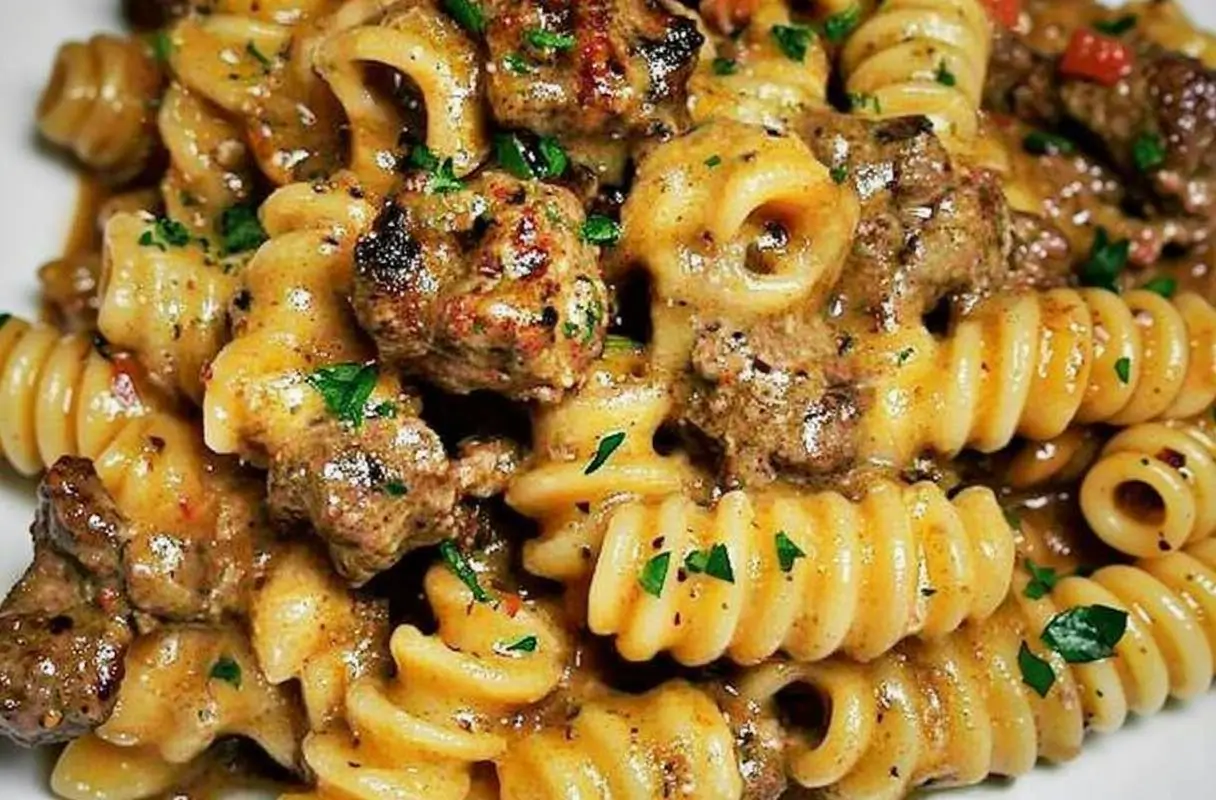
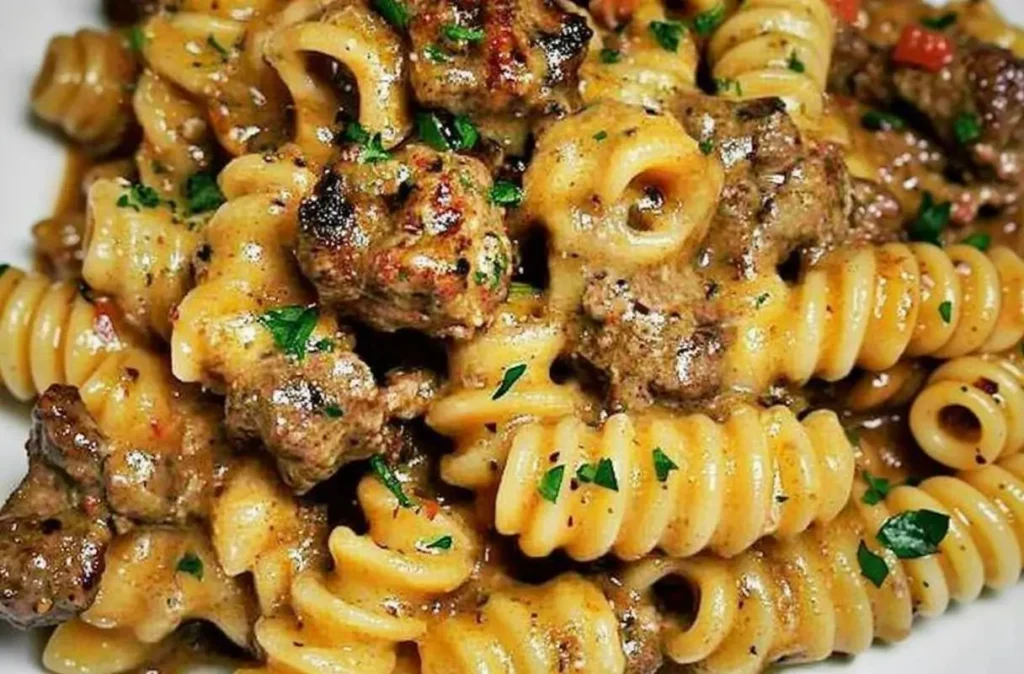
Creamy paprika steak shells is the kind of one-pan dinner that makes you look like you spent way more time cooking than you actually did. Tender cubes of sirloin steak, perfectly cooked pasta shells, and a rich, smoky paprika cream sauce all come together in a single skillet in about 30 minutes. It’s comfort food at its finest—hearty, satisfying, and ridiculously flavorful.
This beef and shells pasta recipe works because everything cooks in the same pan, building layers of flavor as you go. You sear the steak first to get those caramelized edges, then use the same pan to cook the onions and garlic. The pasta cooks right in the beef broth and cream, soaking up all that smoky paprika goodness while the sauce thickens around it. No draining, no extra pots, no mess.
Perfect for busy parents who need a quick weeknight dinner that feels special, anyone craving steak pasta with paprika cream sauce that doesn’t require a restaurant, and meal planners who want something that reheats beautifully for leftovers. This is the recipe you’ll turn to when you want comfort food fast.
Why You’ll Love This Steak and Shells Pasta
- Ready in 30 minutes – From start to finish, this 30-minute steak dinner is faster than ordering takeout
- One-pan wonder – Everything cooks in a single skillet, which means minimal cleanup
- Restaurant-quality flavor – The smoked paprika cream sauce tastes like something you’d pay $20 for at a steakhouse
- Budget-friendly comfort – Sirloin steak is affordable, and the pasta stretches it to feed four people easily
- Family-approved – Even picky eaters love this creamy, mildly spiced pasta with tender steak
The Smoked Paprika Secret
Here’s what makes this recipe different from every other beef and pasta dish: the double paprika punch. We use both smoked paprika and sweet paprika to create a sauce that’s deeply flavored, slightly smoky, and beautifully balanced. Smoked paprika gives you that rich, BBQ-like depth without any heat, while sweet paprika adds color and a mild, fruity flavor.
The tomato paste is the other secret ingredient. Just one tablespoon adds body and a subtle tang that rounds out the cream and beef broth. It’s the difference between a sauce that tastes flat and one that tastes complex and restaurant-worthy.
Key Ingredients
This recipe uses straightforward ingredients, but the technique is what makes them shine.
For the Steak
Sirloin steak (1 lb, cut into bite-sized cubes) – Sirloin is tender enough to cook quickly but affordable enough for a weeknight meal. Cut it into ¾-inch cubes so they sear nicely without overcooking. Swap: Ribeye or strip steak works if you want to splurge. Flank steak or skirt steak works too, but slice it thin against the grain instead of cubing it.
Salt and black pepper – Season the steak generously. This is your chance to build flavor from the start.
For the Pasta and Sauce
Medium pasta shells (12 oz) – The shape matters here. Shells catch the creamy sauce in their little pockets, so every bite is packed with flavor. Swap: Penne, rigatoni, or orecchiette work well. Avoid long pasta like spaghetti—it doesn’t hold the sauce as well.
Beef broth (1.5 cups) – This is the cooking liquid for the pasta and the base of the sauce. Use low-sodium so you can control the salt level. Swap: Chicken broth works in a pinch, but beef broth gives you richer, deeper flavor.
Heavy cream (1 cup) – Makes the sauce rich, smooth, and luxurious. It also helps the sauce cling to the pasta and steak. Swap: Half-and-half works but the sauce will be thinner. Avoid milk—it’s too thin and can curdle.
Tomato paste (1 tablespoon) – Adds umami, body, and a subtle tang that balances the richness. Don’t skip this. Swap: A tablespoon of ketchup works in a true emergency, but tomato paste is better.
Smoked paprika (1 tablespoon) – The star of the show. It gives the sauce a deep, smoky flavor without any heat. Swap: Regular paprika plus a tiny drop of liquid smoke.
Sweet paprika (1 teaspoon) – Adds color and a mild, slightly fruity flavor that complements the smoked paprika.
Garlic (3 cloves, minced) – Savory, aromatic, essential. Fresh garlic is always better than jarred.
Yellow onion (½ medium, diced) – Adds sweetness and depth to the sauce base.
Parmesan cheese (½ cup, freshly grated) – Stirred in at the end for a salty, nutty finish that thickens the sauce slightly. Swap: Pecorino Romano for a sharper, saltier flavor.
Olive oil or butter (2 tablespoons) – For searing the steak and sautéing the aromatics.
Step-by-Step Instructions
This is a fast-moving recipe, so have everything prepped and ready before you start cooking.
1. Prep the steak. Pat the steak cubes dry with paper towels—this helps them sear instead of steam. Season generously with salt and black pepper on all sides.
2. Sear the steak. Heat a large, deep skillet (at least 12 inches) or a wide sauté pan over medium-high heat. Add 1 tablespoon of olive oil or butter. Once it’s shimmering and hot, add the steak cubes in a single layer. Don’t overcrowd the pan—work in batches if needed. Sear for 2-3 minutes per side until the steak is browned and caramelized on the outside but still medium-rare in the center. It will finish cooking later in the sauce. Transfer the seared steak to a plate and set aside.
3. Sauté the onions and garlic. Reduce the heat to medium. Add the remaining tablespoon of oil or butter to the same skillet. Add the diced onion and cook for 3-4 minutes until softened and translucent. Add the minced garlic and cook for 1 minute until fragrant. Don’t let the garlic burn.
4. Add the tomato paste and paprika. Stir in the tomato paste, smoked paprika, and sweet paprika. Cook for 1-2 minutes, stirring constantly, until the tomato paste darkens slightly and the spices are fragrant. This step blooms the paprika and releases its full flavor.
5. Add the broth and cream. Pour in the beef broth and heavy cream, scraping up any browned bits from the bottom of the pan—that’s flavor. Stir until the sauce is smooth and combined. Bring it to a simmer.
6. Add the pasta shells. Stir in the dry pasta shells, making sure they’re mostly submerged in the liquid. Bring the mixture to a boil, then reduce the heat to medium-low. Cover the skillet with a lid and let it simmer for 12-14 minutes, stirring every 3-4 minutes to prevent sticking. The pasta should be tender and the sauce should be thickened and creamy. If the sauce looks too thick, add a splash of beef broth or water. If it’s too thin, simmer uncovered for an extra 2-3 minutes.
7. Return the steak and finish the sauce. Once the pasta is cooked, stir the seared steak back into the skillet along with any juices from the plate. Let it cook for 2-3 minutes to warm through and finish cooking to medium. Remove the skillet from the heat and stir in the grated Parmesan cheese. The cheese will melt into the sauce and make it even creamier.
8. Taste and adjust. Taste the sauce and adjust the seasoning with more salt, pepper, or a pinch of paprika if needed. The sauce should be rich, smoky, and well-balanced.
9. Serve immediately. Spoon the creamy paprika steak shells into bowls and serve hot. Garnish with extra Parmesan, fresh parsley, or a sprinkle of smoked paprika if you want it to look fancy.
Timing, Yield & Skill Level
- Prep time: 10 minutes
- Cook time: 20 minutes
- Total time: 30 minutes
- Yield: 4 servings
- Skill level: Beginner-friendly
Tips for Best Results
- Don’t overcook the steak in step 2 – You’re just searing it to build flavor. It’ll finish cooking in the sauce later, so pull it at medium-rare (internal temp around 130-135°F). Overcooked steak gets tough.
- Dry the steak cubes before searing – Moisture is the enemy of a good sear. Pat them completely dry with paper towels so they brown instead of steam.
- Use a large skillet – A 12-inch skillet gives you enough surface area to sear the steak properly and cook the pasta without overcrowding. A smaller pan will steam instead of sear.
- Stir the pasta frequently – Since the pasta cooks in the sauce, it can stick to the bottom of the pan. Stir every few minutes to prevent burning and ensure even cooking.
- Adjust the sauce consistency – If the sauce gets too thick, add beef broth or water a few tablespoons at a time. If it’s too thin, simmer uncovered for a few extra minutes to reduce it.
- Freshly grate the Parmesan – Pre-grated Parmesan contains anti-caking agents that prevent smooth melting. Grate it yourself from a block for the creamiest sauce.
- Let it rest for a minute – After you turn off the heat, let the dish sit for 1-2 minutes. The sauce will thicken slightly as it cools, making it easier to serve.
- Make it lighter – Use half-and-half instead of heavy cream and reduce the Parmesan to ¼ cup. The sauce won’t be quite as rich, but it’ll still taste great.
Variations & Substitutions
Chicken version: Replace the steak with 1 lb of boneless, skinless chicken breasts or thighs, cut into bite-sized pieces. Sear them the same way, then proceed with the recipe. Use chicken broth instead of beef broth.
Spicy paprika steak shells: Add ½ teaspoon of cayenne pepper or red pepper flakes along with the paprika. You can also stir in a few tablespoons of diced jalapeños with the onions.
Veggie-loaded version: Add 1 cup of sliced mushrooms, 1 diced bell pepper, or 2 cups of fresh spinach. Sauté the mushrooms and peppers with the onions, or stir in the spinach at the very end so it wilts into the sauce.
Low-carb option: Skip the pasta shells and serve the creamy paprika steak over cauliflower rice, zucchini noodles, or mashed cauliflower. The sauce is so good, you won’t miss the pasta.
Wine-spiked sauce: Add ¼ cup of dry red wine after sautéing the onions and garlic. Let it simmer for 2-3 minutes to cook off the alcohol before adding the broth and cream.
Italian-inspired twist: Swap the paprika for Italian seasoning and add ½ cup of sun-dried tomatoes (chopped) to the sauce. Use chicken instead of beef for a completely different flavor profile.
Serving Suggestions
This one-pan beef and shells is a complete meal on its own, but a few simple sides make it feel like a full dinner spread.
- Simple green salad with balsamic vinaigrette to cut through the richness
- Garlic bread or crusty sourdough for soaking up the creamy sauce
- Roasted broccoli or green beans for a fresh vegetable side
- Sautéed spinach with garlic for an easy, classic pairing
- Caesar salad for a steakhouse-style meal
- Roasted Brussels sprouts with bacon for extra indulgence
This dish is perfect for busy weeknights when you need dinner fast, date nights at home when you want something impressive but easy, meal prep (it reheats beautifully), and Sunday family dinners where everyone wants comfort food.
Storage, Freezing & Reheating
Refrigerator storage: Let the pasta cool to room temperature, then transfer to an airtight container. Store in the fridge for up to 4 days. The sauce will thicken as it sits—that’s normal.
Freezing: This dish freezes well for up to 3 months. Let it cool completely, then portion it into freezer-safe containers or bags. Thaw overnight in the fridge before reheating. The pasta might absorb some sauce as it freezes, so you may need to add a splash of broth or cream when reheating.
Reheating: For best results, reheat on the stovetop over medium-low heat with a splash of beef broth or cream to loosen the sauce. Stir frequently until warmed through, about 5-7 minutes. You can also microwave individual portions for 2-3 minutes on 70% power, stirring halfway through. Add a tablespoon of water or broth before microwaving to prevent drying out.
Troubleshooting & FAQs
Can I use a different cut of steak?
Yes. Ribeye, strip steak, or tenderloin work great if you want to splurge. For budget options, try flank steak or skirt steak—just slice them thinly against the grain instead of cubing. Avoid tough cuts like chuck or round steak unless you plan to simmer them much longer.
Why is my sauce too thin or too thick?
If the sauce is too thin, simmer it uncovered for an extra 2-3 minutes to reduce and thicken it. If it’s too thick, add beef broth or water a few tablespoons at a time until you reach the desired consistency. The pasta absorbs liquid as it sits, so day-old leftovers often need thinning.
Can I make this ahead of time?
You can prep the ingredients ahead (cut the steak, dice the onion, mince the garlic), but this dish is best cooked fresh. If you must make it ahead, cook it fully, let it cool, and refrigerate. Reheat gently on the stovetop with added liquid to refresh the sauce.
Can I double this recipe?
Yes, but you’ll need a very large skillet (14+ inches) or a wide, deep sauté pan. You might also need to sear the steak in batches to avoid overcrowding. The cooking times remain the same, but stir more frequently to ensure even cooking.
What if I don’t have smoked paprika?
Use regular sweet paprika and add a tiny drop of liquid smoke (1/8 teaspoon) to mimic the smoky flavor. If you don’t have liquid smoke, the dish will still taste good—just less smoky.
Can I make this gluten-free?
Yes. Use gluten-free pasta shells and make sure your beef broth is certified gluten-free. The rest of the ingredients are naturally gluten-free.